Paddleboarding
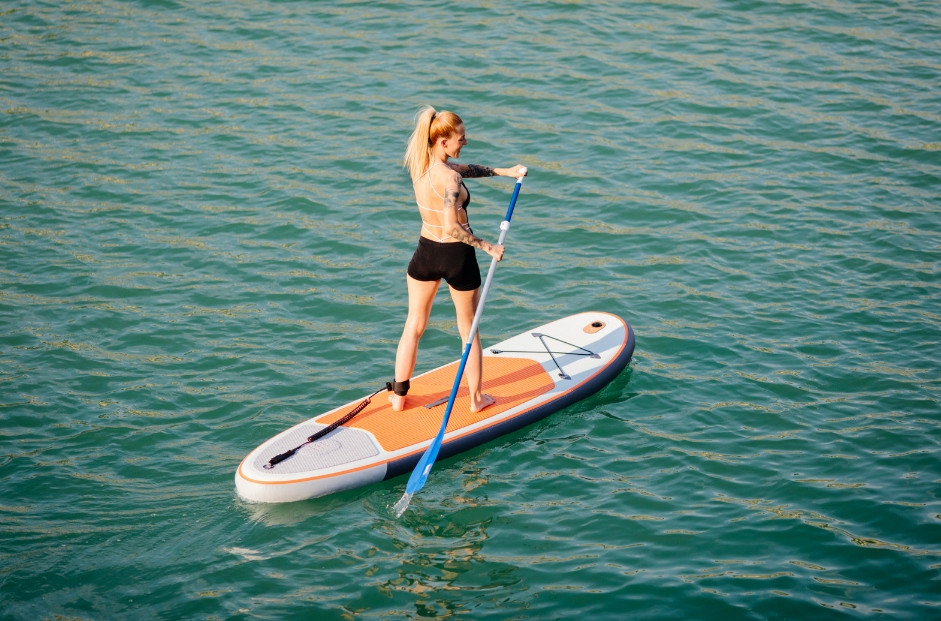
 A paddleboard, also known as a SUP (Stand-Up Paddleboarding), is a watercraft that resembles a surfboard, but is distinguished by its greater stability and large surface area.
A paddleboard is usually shaped like a long and wide board that allows you to stand and move through the water with a paddle.
Unlike surfing, where the rider moves freely on the waves, SUP allows you to move in the same way on calmer waters such as rivers, lakes or even coastal areas. This sport is suitable for all age groups and for all those who want to actively relax and improve their endurance and fitness, because the whole body is equally involved, which has a positive effect on the heart and blood vessels and thus helps to maintain a healthy body weight.
Paddleboarding has deep roots in Polynesian culture, where it was used as a transport and fishing vessel. In Hawaii, it was called “Ku Hoe He’e Nalu,” which translates to “standing and paddling on the waves.” However, today’s modern version of SUP did not develop until the 20th century in Hawaii’s surfing communities.
Ways of using paddleboards
Paddleboards have a wide range of uses and are popular for various activities. The most common uses include:
• Recreational paddleboarding: For lovers of nature and relaxation, paddleboarding is an ideal way to spend time on the water. You can explore the surrounding scenery, observe birds and other fauna or simply relax on the surface.
• Fitness and exercise: Paddleboarding is an excellent way to strengthen the whole body. Standing and paddling strengthens the legs, abdomen, back and arms. Many paddleboard exercises become challenging and fun at the same time.
• River Cruise: River paddleboarding offers a fun adventure with water currents and beautiful scenery on each side of the river.
 • Offshore Paddleboarding: Openwater paddleboarding is an adventurous way to explore coastal areas, explore hidden coves and enjoy stunning views of the sea or ocean.
• Paddleboarding with a dog: Many people love to paddleboard with their dogs, who move around the craft and make the experience all the more exciting.
Sports activities
Paddleboarding offers many different sports activities that cover different interests and experience levels. What sports can be used on paddleboards?
• Paddleboard tourism: On a paddleboard, you can discover various waterways and tourist routes, or discover new, inaccessible places on foot.
• Paddleboard fishing: Paddleboard fishing provides a unique experience and the opportunity to fish in hard-to-reach places.
• SUP Yoga: The combination of paddleboarding and yoga is a great way to strengthen the body, improve balance and connect with nature.
• Paddleboard Races: For more experienced riders, there are various paddleboard races that test speed, agility and endurance.
• Paddleboarding: On the bigger waves, you can try paddleboarding, a slightly different but fun experience.
Rules of paddleboarding
Paddleboarding is great fun, but it’s important to be safe and follow a few simple rules to make your paddling experience enjoyable and carefree:
• Learn proper paddling techniques: Before starting paddleboarding, learn proper paddling techniques from a more experienced instructor or online tutorials. Correct technique helps maintain balance and minimizes the risk of falling into the water.
• Choose a suitable location: To start, look for calm and moderate waters without strong currents or waves. You can gradually move to more challenging waters and thus gain more experience. If you are planning a longer trip, plan your route in advance and let someone you trust know where you are. In case of problems, you will be easier to find.
• Wear a life-saving flotation helmet and life jacket: Even though paddleboarding looks easy, unexpected falls or collisions with other watercraft can happen. Wearing a rescue helmet can minimize the risk of head injury. In rougher water, always wear a good quality life jacket to give you buoyancy support and increase your safety on the water.
• Pay attention to the weather: Check the weather forecast before your trip and don’t be caught off guard by unexpected storms or strong winds.
• Keep your distance from ships and vessels: Avoid approaching ships, vessels and areas with high shipping traffic to minimize the risk of collisions. Follow the rules and regulations regarding paddleboarding in specific areas and respect other visitors on the water.
• Take a mobile phone in a protective case: A mobile phone waterproofed in a protective case will give you the opportunity to contact help in case of emergency or to record unforgettable experiences in photos.
• Improve your swimming and paddling skills: You will feel more comfortable and safer with each trip, so practice regularly and improve your swimming and paddling skills.